





0
In Cart
Sound Healing: Using Singing Bowls, Drums & Music for Relaxation
Word Count: 3,201
Estimated Time to Read: ~13 minutes
Introduction
You’ve likely heard about sound healing: a practice where singing bowls, drums, and music are used to promote relaxation and inner calm. This isn’t about broad wellness puffs. It’s about a focused dive into how singing bowls, drums, and music-based sound healing work together—and how you can use them for real relaxation. You’ll discover specific techniques, what research says (yes, there is verified study), and practical guidance to apply the methods yourself or understand what a practitioner does.
Why Sound Healing Matters
Sound healing, when applied with instruments like singing bowls and drums, taps into more than just “nice sounds”. It can influence your physiology, your mood, and your nervous system. For example:
- A study of 62 participants found significant reductions in tension, anger, fatigue, and depressed mood after a session of singing-bowl meditation.
- In a systematic review of 19 clinical studies, the use of singing bowls showed potential to alleviate anxiety, depression, improve sleep quality and cognitive function.
- Research also suggests brain-wave changes during singing bowl sound meditation—moving toward more relaxed states (theta/delta brain waves) and increased heart rate variability (indicating parasympathetic activation).
These results show that sound healing isn’t just anecdotal; there’s measurable change. That said, it’s not a cure-all. But if you’re looking for tools that help you relax deeply—especially when stress or tension are high—this approach offers something unique.

Understanding the Instruments: Singing Bowls, Drums & Music
Singing Bowls
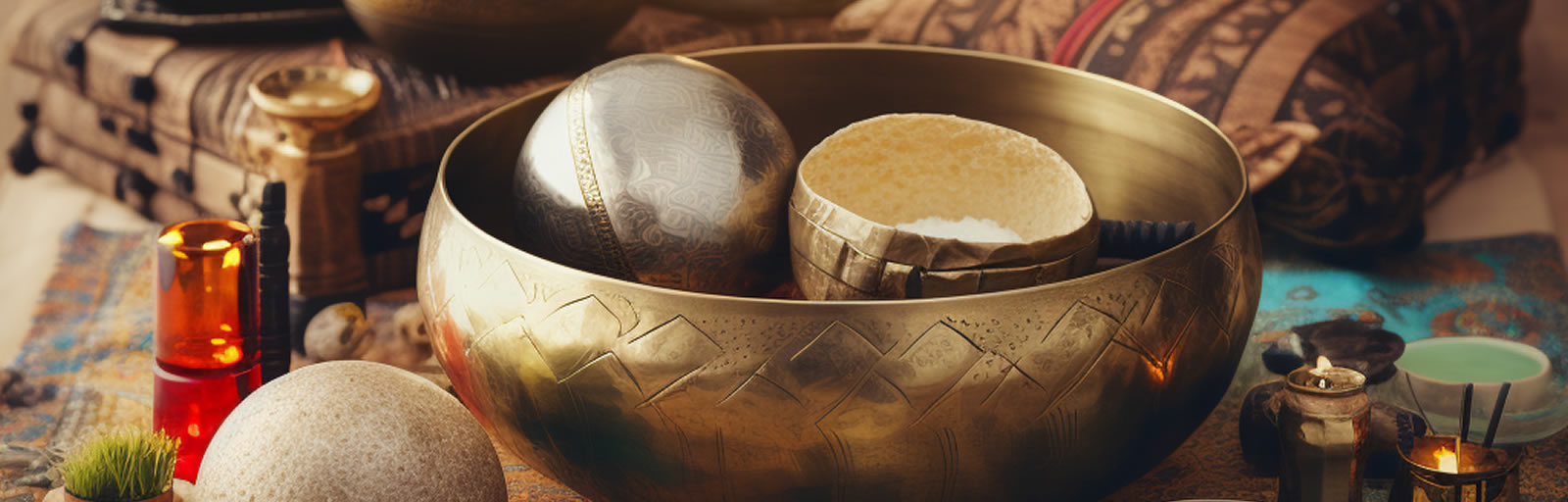
Singing bowls (often called Tibetan singing bowls) are metal bowls usually made of a mixture of metals like copper, tin, zinc, and sometimes silver or gold alloys. You strike or rub the rim with a mallet and the bowl “sings” by generating sustained resonances and rich harmonic overtones.
Key features:
- They produce both audible sound and subtle vibrations you may feel in your body.
- They work not only by hearing but also by physical resonance—your body picks up the vibration.
- Because of the sustained tone, brain-wave entrainment (your brain syncing to different rhythms) becomes possible.
Drums
Drums bring rhythm into the mix. In sound healing, drums often serve to ground you, to provide rhythmical structure, and sometimes to shift your energy from mind-chatter to body-awareness.
How drums contribute:
- Slow rhythmic drumming can lull the nervous system into calmer states.
- Medium or faster rhythms may be used to release tension or move stagnant energy.
- Participating (even tapping a drum yourself) engages the body in movement, not just passive listening.
Music (Including Sound Baths)
Music in sound healing is more than background. It can be structured as a “sound bath”—a session where you lie down or sit comfortably while instruments like bowls and drums (and sometimes gongs, chimes, voice) are played to envelop you in sound.
Why music matters:
- The layering of tones, rhythms and frequencies can facilitate deep relaxation.
- It can shift your attention away from worry, to simply experiencing sound.
- It may encourage a state of “listening deep” rather than just hearing—this shift can open a pathway to relaxation faster.
How Sound Healing Promotes Relaxation
Let’s break down the mechanisms by which singing bowls, drums and music help you relax.
Nervous System Reset
The autonomic nervous system has two main branches: the sympathetic (“fight or flight”) and the parasympathetic (“rest and digest”). When sound healing is done well:
- Your sympathetic tone decreases.
- Parasympathetic activity increases.
Studies using heart rate variability (HRV) show increased parasympathetic activity after singing bowl sessions. For example, one white paper noted improved HRV and reduced stress index after a 20-minute session compared to silence - EEG studies show the brain moving into alpha, theta or even delta wave states—associated with deep relaxation or light sleep.
Vibroacoustic and Resonance Effects
The physical vibrations of bowls or drums can stimulate your body:
- Singing bowl vibrations may resonate with tissues and bodily fluids, offering a subtle massage effect. Altha
- The resonance may influence your body’s “biofield” (a term used to describe energetic aspects of physiology) and bring a sense of balance.
Focus-Shift & Mind-Quieting
Using these instruments helps shift your mind from doing to being:
- The continuous sound of bowls can quiet mental chatter.
- Drums or rhythms act like a metronome for attention, giving your mind something stable to anchor on.
- Because many sound healing sessions invite you to lie down or close your eyes, you reduce external distraction and facilitate internal focus.
Emotional Release and Mood Change
Research shows benefits in mood:
- After a singing bowl session participants reported significantly less tension, anger, fatigue and depressed mood.
- A systematic review found benefits in anxiety, sleep quality and cognitive function.
Using sound healing often opens space for emotional release—tears, relief, letting go—and that itself fosters deep relaxation.
Practical Techniques You Can Use
Here are ways you can integrate sound healing using singing bowls, drums, or music—even if you’re new to it.
Technique 1: Singing Bowl Listening Session
Setup: Lie down or sit comfortably. Use one or more singing bowls. You might play them yourself or use a recorded session.
Protocol:
- Begin with a few deep breaths.
- Strike the bowl or rub the rim gently. Listen to the tone.
- Notice the vibration in your body. Move attention to where you feel it (hands, chest, limbs).
- After a minute or two, strike again, possibly in a different area or using a different bowl, varying the tone.
- Allow the sound to “linger”. As you listen, soften your attention—let the sound come without analysis.
- For 15-30 minutes, continue with intermittent strikes, letting silence and tone alternate.
- Close with a final strike and let the sound fade before opening your eyes.
Why this works: The combination of sustained tone, bodily resonance and internal attention quiets your system and helps you relax. You are both hearing and feeling the instrument.
Technique 2: Drum Grounding Session
Setup: Use a hand drum or frame drum. Sit upright or lie down with a drum near you.
Protocol:
- Begin with the drum quiet. Take 2-3 minutes listening to ambient silence.
- Tap the drum slowly (about 60-70 beats per minute) with soft mallet or hand.
- Match your heartbeat or breathing to the drum rhythm.
- After 2-3 minutes, vary the rhythm: slow, then pause, then medium, then slow again.
- For 10-15 minutes maintain a rhythm that feels calming.
- Gradually reduce the volume and speed until silence.
- Sit or lie in silence for a minute noticing how you feel.
Why this works: The rhythm helps regulate your nervous system. It gives your body a pattern to sync with, allowing you to shift out of stress mode.
Technique 3: Full Sound Bath with Music, Bowls & Drums
Setup: Combine singing bowls, drums, ambient music or live instruments. Lie down on a mat or bed with eyes closed. Use headphones or live sound.
Protocol:
- Begin with ambient music or quiet bowls to introduce softness.
- Introduce drums at low volume for grounding.
- Alternate between bowls and drum or have them layered (bowls shimmering, drums underneath).
- Mid-session, allow a silence of 1-2 minutes—no sound—to let the body absorb.
- Resume with a crescendo (more volume or dense sound) then taper off to a soft finish.
- End with at least 2-3 minutes of silence to let your system integrate the experience.
Why this works: A multi-instrument approach creates a rich soundscape. The layering stimulates not only hearing but the whole body and nervous system. The silence at transition points gives space for integration.
Tips & Best Practices
- Choose a quiet space where you won’t be interrupted.
- Use comfortable position: lying down often works best for deep relaxation.
- Dim lighting or use soft indirect light to encourage introspection.
- Use ear protection if you’re sensitive to certain frequencies or volume.
- Begin with 10-15 minutes if you’re new; you can extend to 30-40 minutes as you feel comfortable.
- After session, move slowly and check in with yourself: notice your breath, your body, your mind.
- If you have metal implants, pacemaker, are pregnant, or have epilepsy, consult your healthcare provider before using strong vibrations or very loud sound.
Evidence & Limitations: What Research Says
It’s important to know what the science supports—and where the gaps remain.
Evidence Supporting Sound Healing
- A 2017 study found that after singing bowl sound meditation, 62 participants reported significantly less tension, anger, fatigue and depressed mood.
- A 2025 systematic review of 19 clinical studies found that singing bowl intervention showed potential in alleviating anxiety, depression, improving sleep and cognitive function across different populations.
- Another study on singing bowl sound massage found that 91.2% of participants reported feeling more integrated, 97.1% more balanced and 76.5% more vitalised.
Limitations & Considerations
- Many studies have small sample sizes.
- A lot of research is preliminary or pilot in nature, so results should be interpreted cautiously.
- Some studies do not control for all variables, or they compare sound healing to silence but not to other active relaxation techniques.
- It is not proven to replace medical treatment for diagnosed conditions—rather it may complement.
- The mechanisms (exactly how sound healing works) are still being explored: brain-wave entrainment, vibration resonance, biofield changes are hypotheses.
What to Tell Someone Considering It
If you’re thinking of trying sound healing with singing bowls, drums and music, keep in mind:
- It’s a low-risk method for many people when used for relaxation and stress reduction.
- It may help you shift into a relaxed state faster than trying to quiet your mind alone.
- Don’t expect immediate “cure” results. Think of it as a tool to support your relaxation toolkit.
- If you have health conditions, use it alongside (not instead of) professional care.
Designing Your Sound Healing Session for Relaxation
Here’s how you might structure a full 30-minute session:
- Preparation (2-3 minutes): Lie down, get comfortable, take a few deep breaths.
- Introduction of sound (5 minutes): Begin with a singing bowl or soft music, letting sound fill the space.
- Main phase (15 minutes): Use a combination of bowls and drums. Alternate tones and rhythm. Let your attention soften into the sounds.
- Transition silence (2 minutes): Stop all sound. Feel the after-effects.
- Closure (5 minutes): A final bowl strike, a slow drum beat, then fading into silence.
- Integration (2-3 minutes): Stillness. Notice your breath, body, feelings. Slowly sit or stand when ready.
Variation tips:
- If you only have bowls: repeat gentle strikes, vary placement (e.g., near chest, near feet), and let yourself feel the vibration.
- If you only have a drum: use a slow rhythm, then silence, then slow rhythm again.
- If you have ambient music track: use it as background, but bring in your own bowls or drums live if possible—live sound has a different effect than just playback.
What to Expect & How to Know It’s Working
You’re not looking for big fireworks—relaxation shows itself subtly. Signs of success:
- Slower, deeper breathing.
- Your body feels heavier, more grounded.
- Mental chatter reduces. You might drift in and out of awareness of the sound.
- Body sensations: tingling, warmth, vibration awareness.
- After the session: you may feel more peaceful, maybe slightly sleepy, and your mood lighter.
If you feel agitated or uncomfortable, switch to a gentler instrument or sound. Sometimes too intense vibration or volume can overstimulate your nervous system.
Frequently Asked Questions
Does it work for everyone?
No, every person is different. Some are highly responsive; others less so. The research indicates potential, not guarantee.
How often should I do it?
For general relaxation, 1-3 times per week can be effective. You may find daily short sessions useful if you’re under high stress.
Do I need special equipment?
You can start with one singing bowl or even a recording. A drum is optional but helpful. Live instruments offer more resonance.
Can I just listen to a recording?
Yes—recorded bowls and drums help. But live sound or live playing adds the vibration dimension which is often stronger.
Is this the same as music therapy?
Not exactly. Music therapy is a clinical discipline using structured music for therapeutic goals. Sound healing with bowls and drums emphasizes vibration, resonance, and experiential relaxation.
Are there any risks?
Minimal for most people, but those with sound sensitivity, epilepsy, metal implants or pacemakers should consult a practitioner or medical professional. Also avoid excessive volume.
Why Combine Singing Bowls, Drums & Music?
Using all three instruments increases richness of the experience:
- Bowls offer harmonic resonance and sustained tones.
- Drums provide rhythm, grounding and movement.
- Ambient music or sound bath layering gives context—or a “soundscape” you can immerse in.
Together, they bypass the “thinking mind” faster and invite you into sensations, feelings and deeper body awareness.
When you mix them, you activate multiple pathways: auditory, tactile (vibration), vestibular (balance/inner ear if lying down with vibrations), and emotional. That multi-sensory engagement enhances relaxation.
Summary: What You Can Do Now
- Choose one instrument to begin: a singing bowl or drum.
- Set aside 20-30 minutes in a quiet place.
- Start with a simple session: go through breathing, sound introduction, main phase, silence, closure.
- Keep your eyes closed or softly glazed.
- Notice how you feel before, during and after.
- After a week of practice observe whether you feel calmer, sleep better or less tense.
- If you like it, expand: incorporate drums + bowls, try different rhythms, try different session lengths or styles.

Final Thoughts
Sound healing using singing bowls, drums and music offers a potent route to relaxation. The intersection of vibration, rhythm and internal focus makes it unique. The research—while still evolving—shows promising benefits for tension reduction, mood enhancement and nervous system calm. By practising thoughtfully, you’ll give yourself a reliable tool for managing stress, restoring calm and reconnecting with a grounded sense of self.
View our Live Telephone Psychic Readers
Images by Carl Burness
SHARE THIS POST WITH YOUR FRIENDS:
Read further posts:

Jun. 24, 2026
The Language of Symbols in Healing and Dreams

Jun. 15, 2026
Healing from Burnout Using Spiritual Frameworks
Jun. 08, 2026
How to Track Moon Phases for Personal Transformation

Jun. 04, 2026
Daily Energy Protection Practices for Highly Sensitive People

May. 26, 2026
Working with Spirit Animals: Meaning and Connection

May. 20, 2026
How to Create Your Own Personalized Tarot Spreads

May. 13, 2026
The Role of the Subconscious in Psychic Development

May. 05, 2026
How to Clear Your Aura After Challenging Interactions
Apr. 29, 2026
Tarot and Seasonal Rituals: Aligning Readings with the Earth Cycle

Apr. 21, 2026
The Difference Between Intuition and Ego: How to Tell Them Apart

Apr. 14, 2026
How to Develop Clairaudience (Psychic Hearing): Signs & Exercises

Apr. 07, 2026
How to Read Tarot for Children or Teens

Apr. 01, 2026
How to Recognise and Interpret Synchronicities in Daily Life

Mar. 24, 2026
Late-Night Psychic Phone Readings for Australians Who Need Guidance Now

Mar. 14, 2026
Why Australians Are Choosing UK Psychic Phone Readings for Spiritual Guidance

Mar. 11, 2026
Understanding and Using Sacred Geometry in Healing
Mar. 02, 2026
Using Tarot for Emotional Healing After Trauma

Feb. 23, 2026
Shadow Work for Spiritual Growth: A Step-by-Step Guide

Feb. 17, 2026
Signs from Loved Ones Who’ve Passed On: What to Look for

Feb. 10, 2026
Manifesting Love: How to Use New Age Tools—Tarot, Crystals, Affirmations

Feb. 03, 2026
Mindful Eating & Spirituality: Does What You Eat Affect Your Energy?

Jan. 28, 2026
How Psychic Readings Can Help in Business & Career Decisions

Jan. 20, 2026
How Psychic Readings Can Help with Grief
Jan. 13, 2026
How to Use Tarot Spreads: Daily, Weekly & Special Purposes

Jan. 06, 2026
Spiritual Significance of Dreams: Lucid Dreaming, Nightmares, and Recurring Dreams

Dec. 30, 2025
How to Create a Sacred Space at Home: Altars, Smudging, Candles, and More

Dec. 19, 2025
A Wellbeing guide for enjoying Christmas
Dec. 16, 2025
Using Colour & Journalling for Spiritual Growth

Dec. 09, 2025
Signs of Psychic Intuition: How to Recognize Yours

Dec. 03, 2025
What to Ask During a Psychic Reading: 10 Good Questions

Nov. 26, 2025
How to Connect with Your Spirit Guides or Angels

Nov. 18, 2025
Understanding Energy Healing: Chakras, Auras, Reiki, and More
Nov. 12, 2025
Using Aromatherapy Oils to Reduce Stress & Anxiety

Nov. 06, 2025
How Crystals Can Support Emotional Wellbeing: Science or Spirituality?
Oct. 29, 2025
Sound Healing: Using Singing Bowls, Drums & Music for Relaxation

Oct. 23, 2025
Spiritual Tools Every New Age Beginner Should Own

Oct. 14, 2025
How to Use Dreamcatchers & Wind Chimes to Improve Sleep & Energy

Oct. 08, 2025
How to Use Incense and Smudge Sticks for Space Cleansing

Sep. 30, 2025
Moon Rituals: How to Use the New Moon and Full Moon to Reset

Sep. 25, 2025
A Beginner’s Guide to Astrology: Sun, Moon & Rising Signs
Sep. 16, 2025
Tarot Cards 101: Meaning of Major & Minor Arcana

Sep. 10, 2025
The Power of Gratitude in Elevating Your Energy and Awareness

Sep. 01, 2025
Understanding the Role of the Ego in Your Spiritual Path

Aug. 26, 2025
How to Work With Crystals for Emotional and Spiritual Wellness

Aug. 19, 2025
Balancing the Chakras: A Practical Guide for Beginners
Aug. 13, 2025
How to Create a Sacred Space at Home for Daily Reflection | Simple Steps for Peace & Mindfulness

Aug. 05, 2025
Beginner’s Guide to Meditation for Spiritual Growth

Jul. 29, 2025
Yoga as a Spiritual Practice: More Than Just Flexibility

Jul. 23, 2025
The Role of Nutrition in Spiritual Clarity and Energy

Jul. 17, 2025
How to Create a Daily Wellness Routine That Feeds the Soul

Jul. 11, 2025
The Connection Between Mindfulness and Physical Health

Jul. 03, 2025
Signs You’re Experiencing a Spiritual Awakening

Jun. 25, 2025
Are You an Empath? 7 Psychic Signs You Might Be an Empath

Jun. 18, 2025
Psychic Readings vs. Tarot Cards: What’s the Difference?

Jun. 11, 2025
How a Psychic Reading Can Help You Heal After a Breakup

Jun. 04, 2025
Can a Psychic Help You Find Your Soulmate?
May. 28, 2025
The Most Common Love Questions People Ask Psychics

May. 20, 2025
What Your Favorite Color Reveals About Your Aura

May. 14, 2025
The Spiritual Meaning Behind Recurring Dreams

May. 07, 2025
What Your Love Life Says About Your Energy Field

Apr. 28, 2025
Should You Ask a Psychic About Your Ex?

Apr. 22, 2025
Top 7 Benefits of Getting a Psychic Reading by Phone

Apr. 16, 2025
Lifestyle and Health

Apr. 08, 2025
What to Expect During Your First Psychic Phone Reading

Apr. 01, 2025
Mindfulness for Beginners: A Step-by-Step Guide to Living in the Present
Mar. 25, 2025
Using Essential Oils for Emotional and Spiritual Well-Being

Mar. 19, 2025
Understanding Karma: How Your Actions Shape Your Spiritual Path

Mar. 10, 2025
The Role of Mercury Retrograde in Personal Transformation

Mar. 03, 2025
How Meditation Can Help You Manifest Your Dreams

Feb. 24, 2025
Astrology for Healing: How the Planets Influence Your Energy
Feb. 18, 2025
Energy Healing Explained: What Is Reiki and How Does It Work?

Feb. 10, 2025
Breaking Through Limiting Beliefs: A Spiritual Approach to Self-Healing

Feb. 03, 2025
The Magic of Sacred Plants: Spiritual Benefits of Herbal Teas and Remedies

Jan. 29, 2025
Stargazing for the Soul: Finding Inspiration in the Night Sky

Jan. 21, 2025
The Science of Synchronicity: How to Recognize Spiritual Signs in Everyday Life

Jan. 17, 2025
Channeling and Spirit Guides: How to Connect with Higher Wisdom

Jan. 14, 2025
Soulmates and Twin Flames: How to Recognize Spiritual Connections

Jan. 09, 2025
The Spiritual Lessons of the Seasons: Finding Balance in Change

Jan. 06, 2025
How to Align Your Chakras for Balance and Harmony

Jan. 02, 2025
Awakening Your Higher Self: 7 Practices to Raise Your Vibrational Energy

Dec. 29, 2024
The Law of Attraction Explained: How to Manifest Your Ideal Life

Dec. 20, 2024
Harnessing the Power of the Moon for Personal Growth

Dec. 18, 2024
The Art of Journaling for Spiritual Growth: 5 Techniques to Deepen Your Practice

Dec. 15, 2024
How to Perform a Full Moon Ritual for Releasing Negativity

Dec. 12, 2024
Sacred Smudging: How to Cleanse Your Space with Sage and Palo Santo

Dec. 09, 2024
The Power of Affirmations: Transform Your Life with Positive Energy
Dec. 05, 2024
Sacred Spaces: Creating a Meditation Room at Home

Dec. 03, 2024
Grounding Techniques: How to Connect with Earth Energy Daily

Nov. 29, 2024
The Healing Power of Sound: Exploring Singing Bowls and Mantras

Nov. 26, 2024
Forest Bathing: Reconnecting with Nature for Spiritual Healing

Nov. 23, 2024
The Spiritual Meaning of a Morning Ritual: How to Start Your Day with Purpose

Nov. 19, 2024
Psychic Guides and Personal Transformation: From Doubt to Belief

Nov. 13, 2024
Psychic Guides and the Power of Gratitude: Cultivating Positivity
Nov. 09, 2024
Timing with Tarot: Using Tarot to Predict Timelines and Events

Nov. 04, 2024
Tarot and Dream Interpretation: Using Tarot to Decipher Dream Symbols

Oct. 30, 2024
Tarot and the Chakras: Combining Tarot with Chakra Energy Work

Oct. 25, 2024
Tarot Ethics: Guidelines for Ethical Tarot Reading and Consulting

Oct. 22, 2024
Tarot Rituals: Incorporating Tarot into Meditation and Spiritual Practices

Oct. 03, 2024
Reversed Cards: Interpreting Reversed or Inverted Tarot Cards

Sep. 30, 2024
Symbolism in Tarot: Analyzing Symbols, Colors, and Imagery in Cards

Sep. 27, 2024
Understanding Dream Interpretation Through Psychic Readings

Sep. 24, 2024
Can Psychic Readings Help You Make Career Decisions?

Sep. 22, 2024
How Psychic Readings Can Help You Find Love and Improve Relationships

Sep. 18, 2024
How Psychic Readings Can Offer Guidance During Difficult Times

Sep. 15, 2024
Why Energy Readings Can Help You Clear Blocks and Move Forward

Sep. 11, 2024
Psychic Guides and Empathy: Nurturing Your Empathic Abilities

Sep. 08, 2024
Mindfulness and Meditation: Benefits, Techniques, and How to Get Started with Mindfulness and Meditation Practices

Sep. 02, 2024
Positive Psychology: Techniques for Fostering a Positive Mindset and Increasing Happiness

Aug. 28, 2024
Psychic Guides and Psychic Mediums: Bridging the Spiritual Gap

Aug. 20, 2024
Building a Support Network: Importance of Having a Strong Social Support System and Tips for Building One

Aug. 13, 2024
Self-Care Routines: Ideas for Incorporating Self-Care into Daily Life

Aug. 07, 2024
Psychic Mediumship: Connecting with Loved Ones on the Other Side

Aug. 02, 2024
Psychic Predictions: What to Expect and How to Interpret Them

Jul. 30, 2024
Psychic Readings for Career Guidance: Finding Your True Calling

Jul. 25, 2024
Building Resilience: How to Develop Resilience and Cope with Life’s Challenges

Jul. 22, 2024
Dream Interpretation: Unveiling the Messages from Your Subconscious

Jul. 18, 2024
The History of Psychic Readings: From Ancient Times to Modern Practices
Jul. 16, 2024
Psychic Development: Cultivating Your Intuition

Jul. 12, 2024
Nature and Wellbeing: The Benefits of Spending Time in Nature and How to Incorporate It into Daily Life

Jul. 09, 2024